Coffee machines for cafés, coffee shops and chains
If you open several outlets, importing the bar once is cheaper than buying it five times. Here is how we plan it.
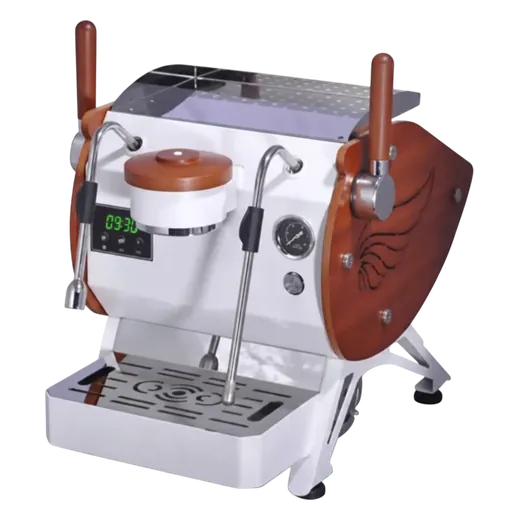
What one outlet needs
| Outlet | Cups a day | Machines | Grinders |
|---|---|---|---|
| Kiosk, food truck | up to 80 | 1 three-boiler machine | 1 |
| Bakery or brunch place | 80–160 | 1 two-pump machine + 1 spare | 2 |
| Coffee shop | 160–300 | 2 one-group machines | 2 |
| Hotel bar | up to 80 | 1 dual boiler + 1 bean-to-cup for breakfast | 1 |
| Busy chain outlet | 300+ | Two or three-group, quoted separately | 3 |
We count peak hours, not the daily total. Two small machines survive a breakdown, one big machine does not.
The noise test
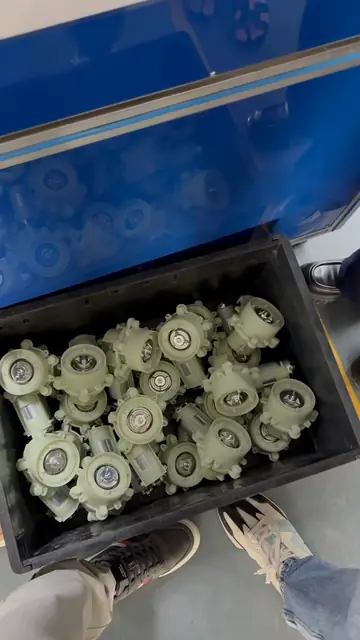
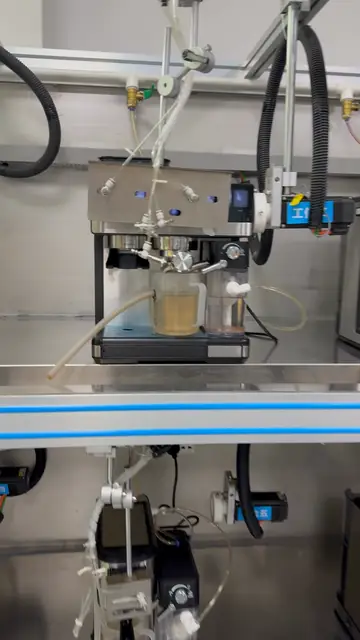
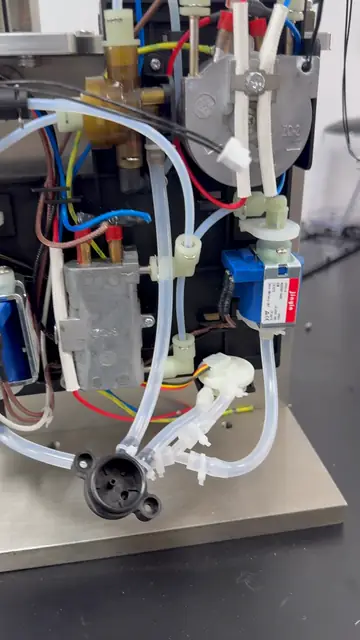
In a café the grinder is louder than the machine. In this clip the fixture grinds beans for minutes to measure flow and heat.
Ask us for the decibel figure of the model you like. If the factory cannot give one, we record it on the next visit.
Bar set for a small chain
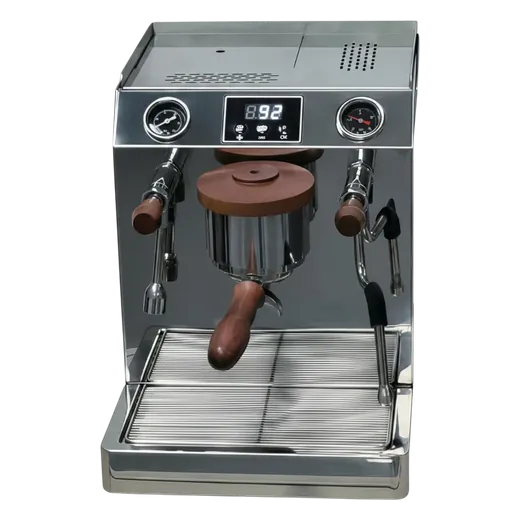
Main machine: dual boiler, stainless.
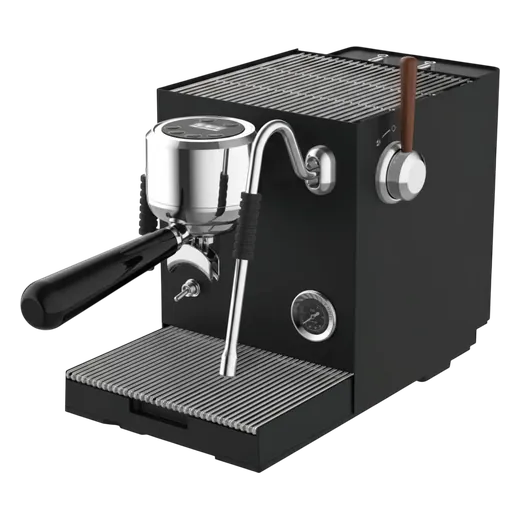
Backup: tank or mains, fits a kiosk.
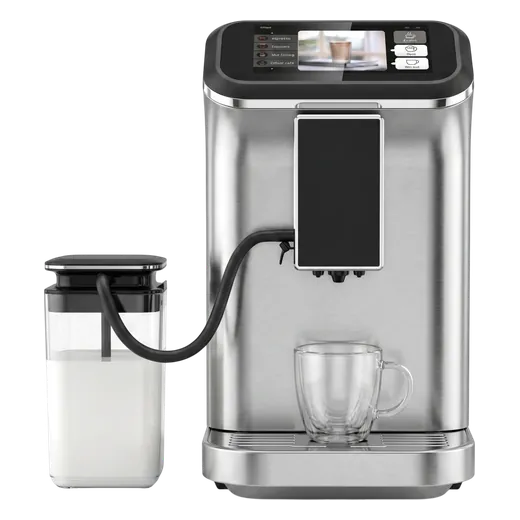
Breakfast and staff: bean-to-cup.
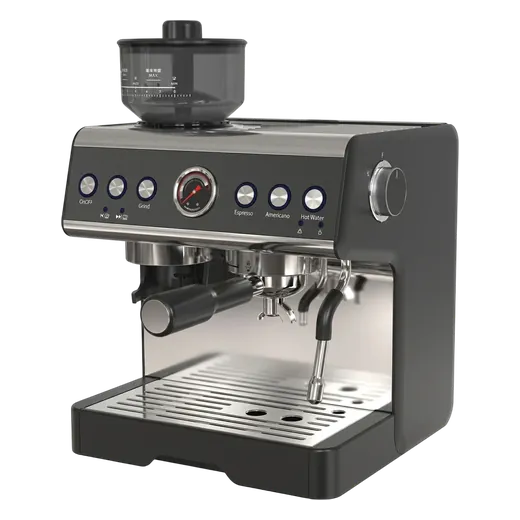
Training and catering: machine with grinder.
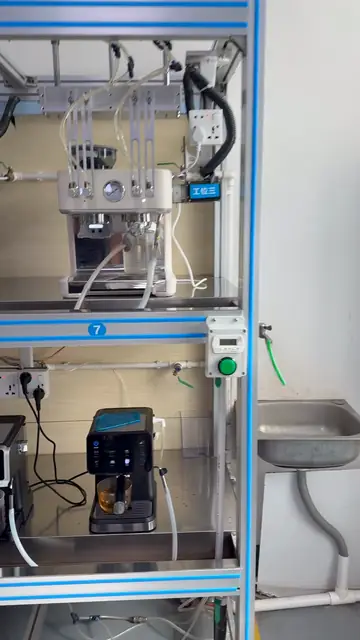
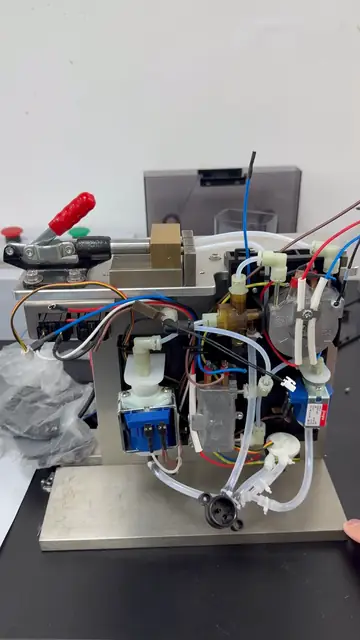
Bar machines on the rig
Before we suggest a machine for a bar, we want to see it run without a person next to it.
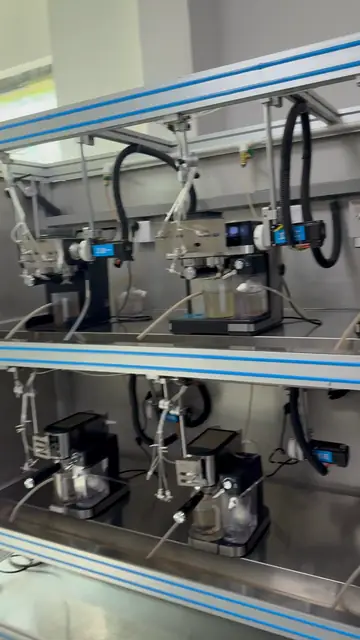
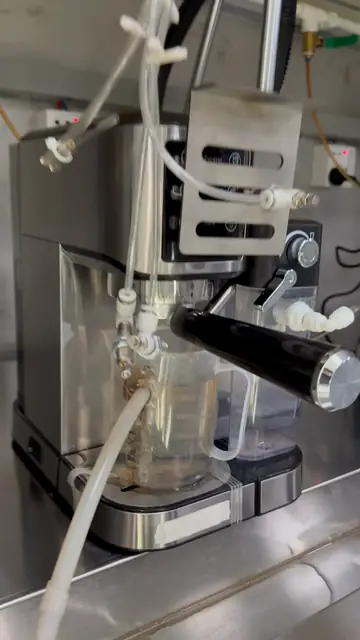
For a single café
A full container makes no sense for one shop. Two ways work: join a container of a distributor, or order with a group of cafés. Tell us where you are, sometimes a shipment to your city is already planned.
Service
Find a technician before the machines arrive and let him open the sample. We send the wiring diagram and the parts list. A water filter on every machine is cheaper than one visit.
Sets for a coffee shop
Equipment for one place. Cups, knock box and tampers are cheaper to buy locally.
| Item | Kiosk | Small café, 30 seats | Coffee shop, 60 seats |
|---|---|---|---|
| Espresso machine | 1 triple thermoblock, 14 kg | 1 dual boiler or heat exchange | 2 one-group, or 1 two-group |
| Espresso grinder | Built in, or 1 × 60 mm | 1 × 60 mm | 2 × 74 mm or 60 mm |
| Filter grinder | — | 1 home class | 1 × 60 mm |
| Filter brewer | — | 1 with thermal carafe | 2 with thermal carafes |
| Backup | Capsule or one-touch | One-touch bean-to-cup | Second machine is the backup |
| Parts | Gaskets, screens | Gaskets, screens, probe, pump | The same × 2 |
| Water | Tank, bottled | Line + softener | Line + softener + sediment |
Grinder with 74 mm burrs and a 1.2 kg hopper gives about 4 g a second, so a double dose is ready in five seconds.
Coffee machine for a small café
A small café sells 80 to 150 cups a day, half of them before eleven. One good one-group machine does it, if steam and coffee do not share one thermoblock. Spend the difference on the grinder: a better grinder is tasted in every cup, a second group only on Saturday.
Places with changing staff should look at a machine with volumetric buttons. The owner sets the dose, everyone presses the same button.
Opening five places in a year
Order machines for three and parts for five, and reserve the rest at the same price for half a year. Openings slip, and machines in a warehouse do not make coffee. Keep one full set in the central kitchen as a school and as a reserve.
Numbers for the business plan
- 18 g of coffee for a double, 9 g for a single, plus 3 percent for setting the grinder.
- Half a litre of milk for three large lattes.
- 2.7 to 3.2 kW for a bar machine, 0.2 kW for a grinder.
- 20 to 30 minutes of cleaning a day, paid time.
- A filter sized by litres, see water for coffee machines.
- 3 to 5 percent of the equipment value for parts in the first year.
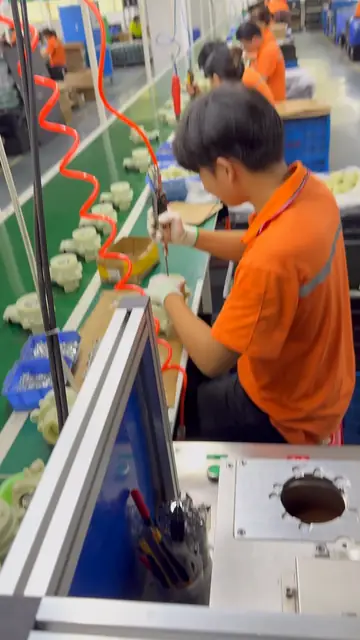
Grinder and machine, filmed at the factory
Questions buyers ask
Can I order five machines for five outlets?
Usually as part of a shared container. Write the city and the month, we check what is going there.
Do machines fit UK plug sockets?
Yes, plug type G is specified in the order. Bigger machines may need a direct connection by an electrician.
Are there two-group machines?
Yes, from specialised factories. Send a reference and we look for an equal model.
What coffee machine do I need to open a coffee shop?
For up to 160 cups a day a one-group dual boiler or heat exchange machine and one or two 60 mm grinders. From 200 cups two machines or a two-group.
How much does equipment for a small coffee shop cost?
Bar machines are quoted by configuration. Plan the machine, one or two grinders, water treatment, installation and parts as one sum, and ask for all of it in one calculation.
Read next
Tell us what you need
One WhatsApp message is enough: type of machine, quantity, city. We reply with models and a price calculation.